If you’ve ever shopped for a wooden nightstand, you know there’s a lot more to it than just picking something that looks nice. The truth is choosing the right wood for a nightstand plays a huge role in both durability and style. Whether you’re picking out a wooden nightstand to buy or thinking of building one yourself, the type of wood you choose matters more than you might realize.
In this guide, we’re going to walk you through everything you need to know, from understanding which woods are best for nightstands to showing you 8 top picks that are stylish, functional, and built to last. We’ll also share smart tips on how to care for your wooden nightstand.
For even more design ideas and styling tips, check out our bedroom inspirations before you shop.
Table of Content
- Best Woods for Nightstands
- Oak Nightstands
- Walnut Nightstands
- Pine Nightstands
- Maple Nightstands
- Mahogany Nightstands
- Burl Wood Nightstands
- 8 Best Wood Nightstands to Buy in 2025
- What to Consider When Choosing Wood for a Nightstand
- How to Care for a Wooden Nightstand
- FAQs on Wooden Nightstands
Best Woods for Nightstands
Before you fall in love with a particular design, it’s a good idea to know your wood options. The right wood for a nightstand should be durable, stylish, and match your space. Here’s a closer look at the most popular choices.
Great clarification! Here’s a cleaner, focused table with only the 6 wood types you want, and I’ll leave out the pros and cons (since you’ll include them in their sections). I’ve also updated the price range based on typical market data as of April 2025:
A Quick Comparison Table
| Wood Type | Durability | Color & Grain | Price Range | Style Compatibility |
| Oak | High | Light to medium brown; pronounced grain | $250 – $500+ | Traditional, Rustic, Modern |
| Walnut | High | Rich dark brown; straight, smooth grain | $400 – $850+ | Modern, Mid-century, Luxe |
| Pine | Moderate | Pale yellow; soft, subtle grain | $120 – $300+ | Farmhouse, Cottage, Rustic |
| Maple | High | Creamy white to light reddish-brown | $200 – $450+ | Contemporary, Minimalist |
| Mahogany | High | Deep reddish-brown; fine, straight grain | $500 – $1,000+ | Classic, Antique, Formal |
| Burl Wood | Moderate to High | Irregular swirls and knots; unique patterns | $600 – $1,200+ | Glam, Art Deco, Statement |
Oak Nightstands
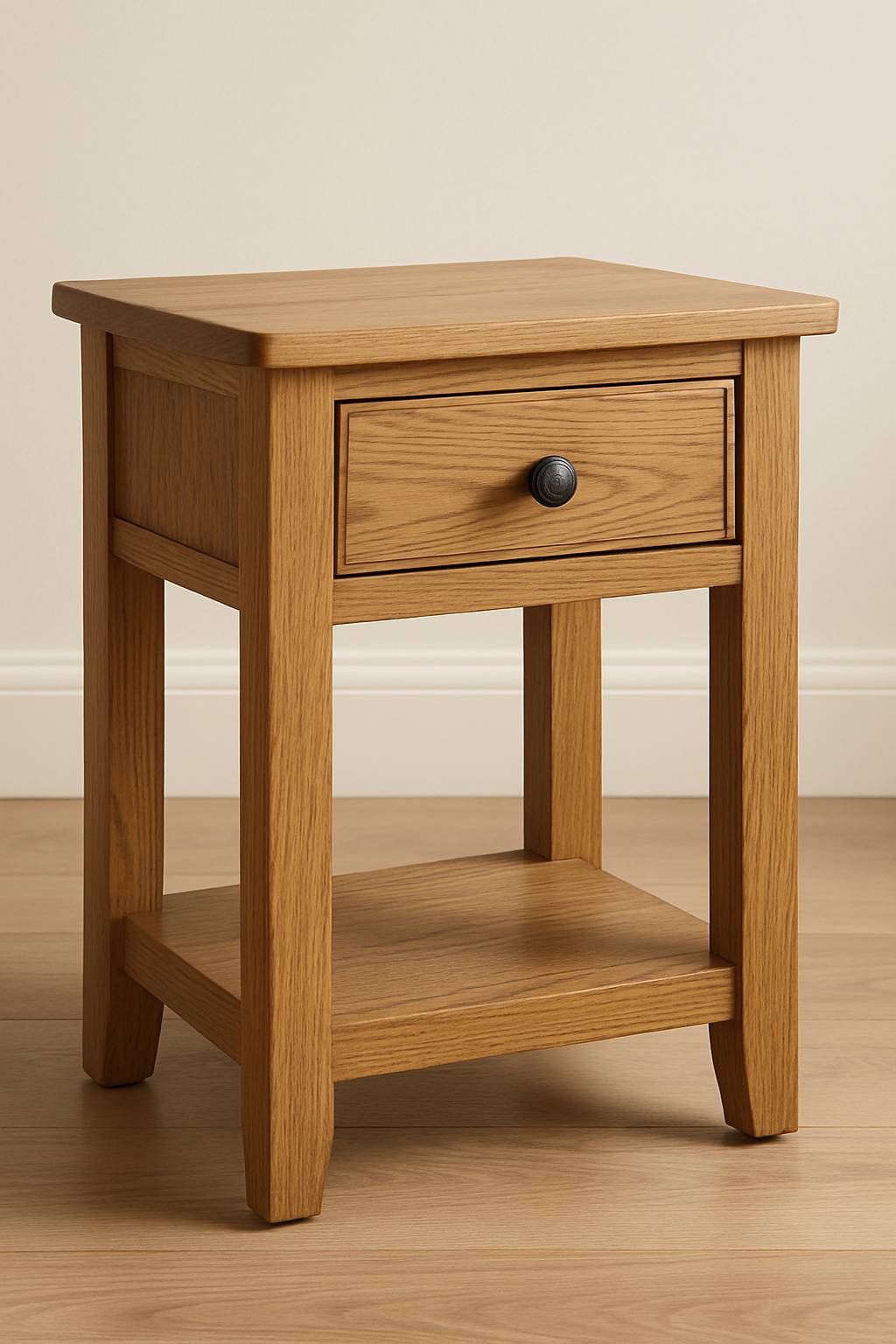
Oak is one of the most popular choices when it comes to picking the best wood for a nightstand. It’s strong, dependable, and has a beautiful natural grain that brings warmth and character to your space.
Oak usually comes in light to medium brown shades, but you can easily stain it darker if you want to match a specific bedroom vibe. Oak nightstands are a solid choice if you’re after something that’s both good-looking and built to last.
Pros:
- Oak is incredibly durable and can handle daily wear and tear for years without losing its strength, making it perfect if you want a long-lasting piece.
- This wood stains and finishes well, giving you the flexibility to match your nightstand to different color schemes or room styles over time.
- Its classic grain pattern fits effortlessly into a wide range of bedroom designs, whether you love rustic, farmhouse, or even more modern looks.
Cons:
- Because oak is a very dense and heavy wood, moving your nightstand around (for cleaning or rearranging) can be a hassle.
- Oak tends to be pricier than softer woods, so if you’re working with a tight budget, it might not be the cheapest option out there.
Walnut Nightstands
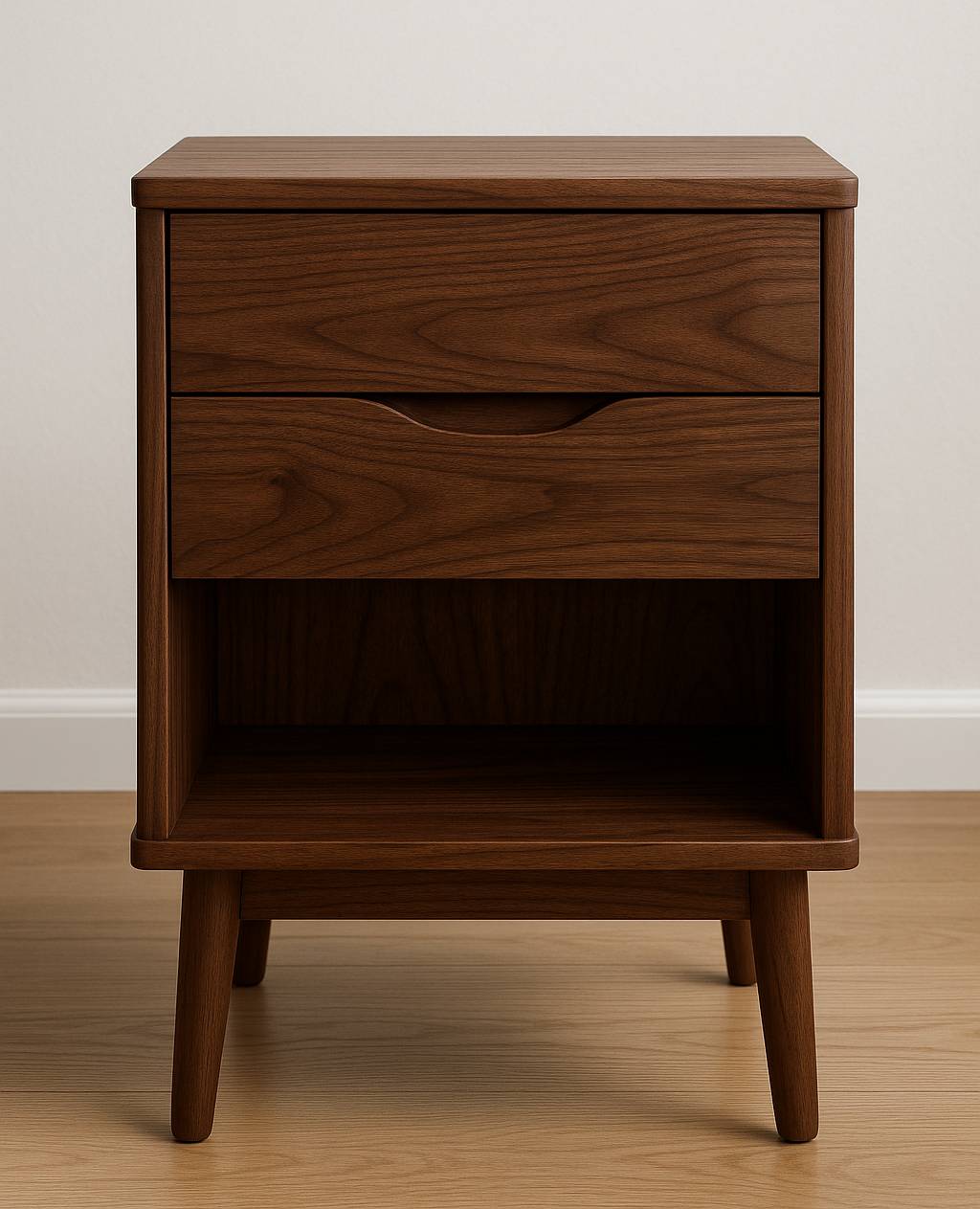
Walnut is known for its rich, dark brown color and smooth, sleek texture, which gives off a high-end, polished look. It’s one of the best woods for a bedside table if you want something that feels a bit more sophisticated and luxurious.
Walnut nightstands fit beautifully in modern, mid-century, or even luxe bedrooms where you want your furniture to make a statement but still look timeless.
Pros:
- Walnut’s deep, rich tones add a level of elegance and warmth to your bedroom, making it ideal if you want a more upscale or dramatic feel.
- It is a hardwood that’s naturally resistant to warping and shrinking, so you can trust it to hold up well over the years, even in changing weather conditions.
- Thanks to its smooth texture and straight grain, walnut nightstands always look polished and timeless, blending well in modern or mid-century styled spaces.
Cons:
- Walnut furniture tends to be on the more expensive side, which can be a drawback if you’re trying to keep costs low.
- The dark color, while stunning, makes smaller bedrooms feel more enclosed or shadowy, especially if your room doesn’t get a lot of natural light.
Pine Nightstands
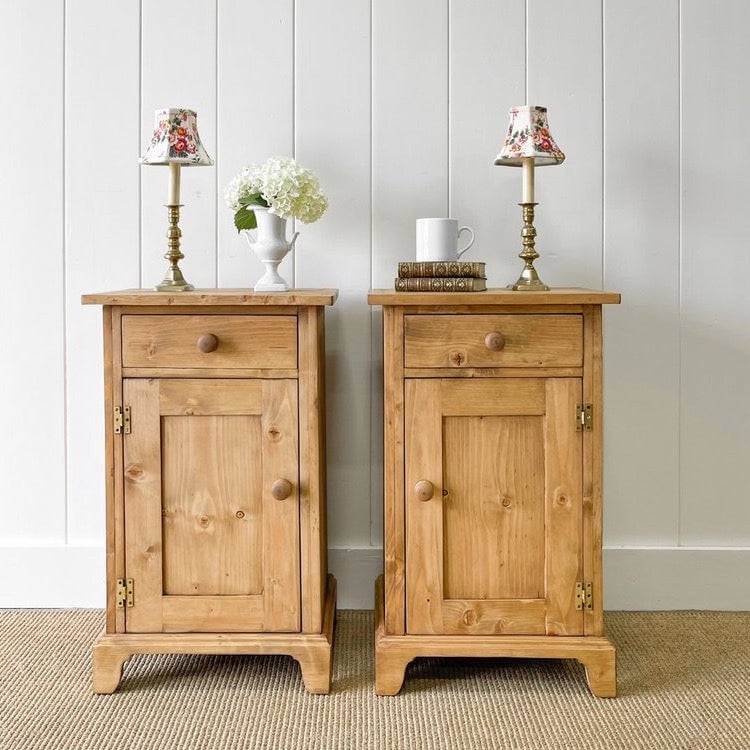
Pine is one of the most affordable woods out there, which makes it a great option if you want a nightstand that’s budget-friendly but still offers the beauty of natural wood. It has a soft, light yellowish tone that brings a bright, cheerful look to your bedroom. It’s also a softer wood, which means it’s easier to work with if you’re planning a DIY nightstand project.
Pine nightstands are a lovely pick for farmhouses, cottages, or rustic bedrooms where you want a casual and cozy vibe.
Pros:
- Pine is lightweight and easy to move, so if you like to change up your room layout often, you’ll really appreciate how manageable it is.
- This wood is a dream to paint or stain, giving you endless customization options to match your bedroom’s color scheme or style.
- Pine is generally one of the most budget-friendly wood choices, allowing you to get that natural wood look without overspending.
Cons:
- Because pine is a softwood, it’s more prone to dents, scratches, and general wear, which means it may not hold up as well in the long run compared to harder woods.
- Pine can also develop a yellowish tint over time if it’s not properly sealed or finished, which might change the look of your nightstand down the line.
Maple Nightstands
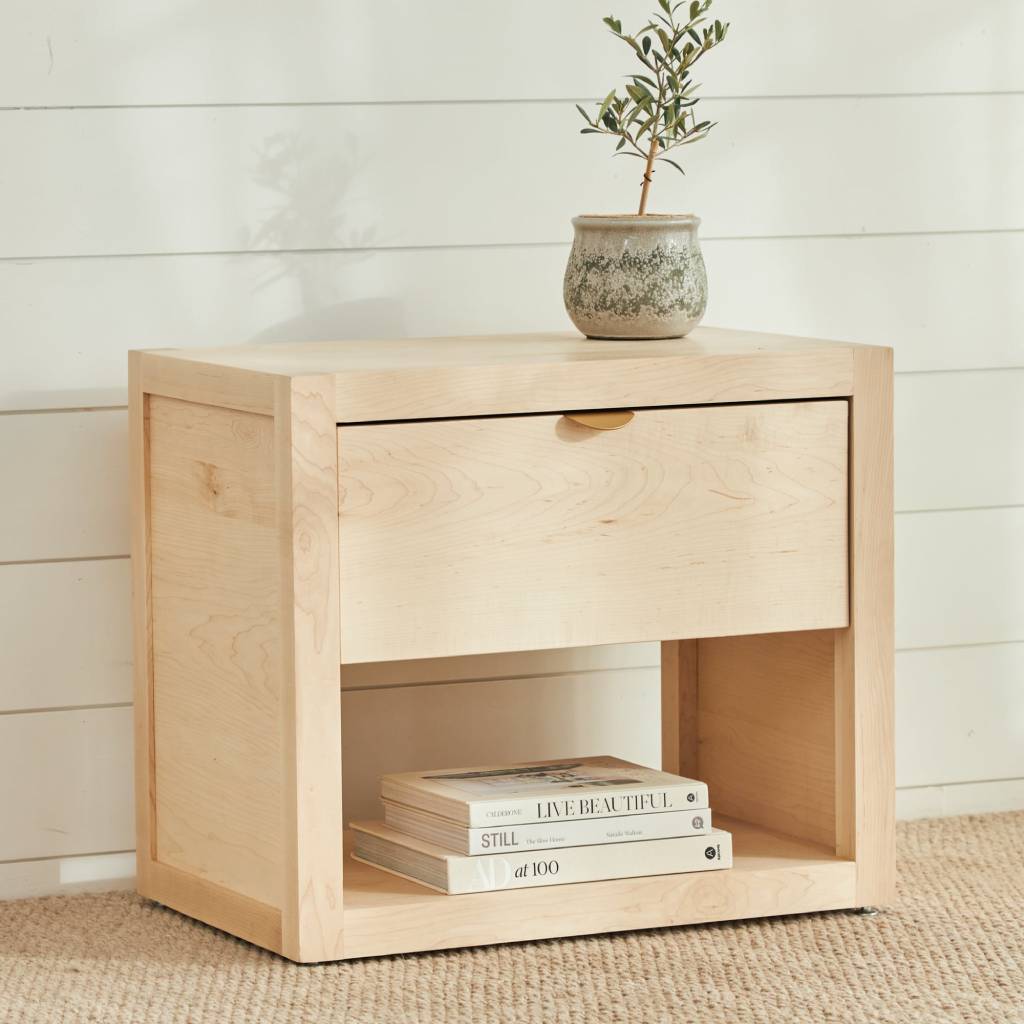
Maple is a fantastic choice if you love smooth finishes and a clean, modern look. Maple wood has a creamy white to light reddish-brown color and is super hard, making it one of the best woods for a nightstand that needs to last. It’s often used in modern and minimalist furniture because of its fine grain and polished look.
Maple nightstands are also great if you want something that holds up well in busy households.
Pros:
- Maple’s dense, hard nature means it can withstand daily use with ease, so it’s perfect if you need something sturdy that will last for years.
- The fine grain pattern provides a smooth, even finish, making maple nightstands look sleek and well-crafted.
- It pairs beautifully with bright and airy bedroom designs, especially if you want something that feels fresh and clean.
Cons:
- Maple can be tricky to stain evenly because of its tight grain, so if you’re planning to customize your nightstand’s color, you might need to take extra care.
- While it’s more affordable than some premium woods, maple still costs more than budget options like pine, which may be a consideration if you’re price-sensitive.
Mahogany Nightstands
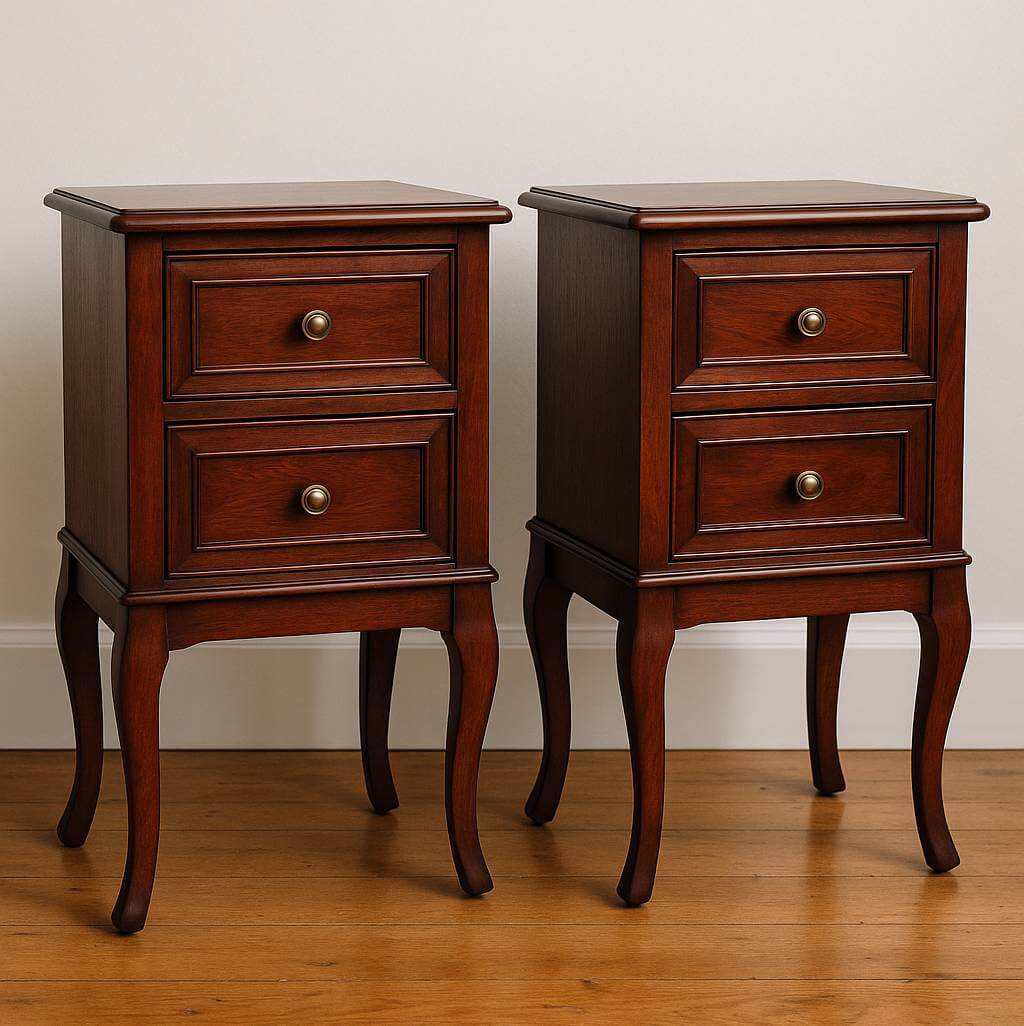
For those of you who love rich, deep colors and a timeless, elegant look, mahogany is a standout. This wood is known for its deep reddish-brown tones and fine, straight grain that screams classic style. If you’re after something formal and luxurious, mahogany is one of the best woods for a nightstand that can double as an heirloom piece.
Mahogany nightstands are perfect for more formal or traditional bedrooms, especially if you’re going for that upscale, antique-inspired feel.
Pros:
- The deep, warm color of mahogany brings a sense of richness and tradition to your bedroom, creating a luxurious and inviting feel.
- Mahogany is extremely durable and resists warping and cracking over time, making it a solid investment if you want a nightstand that can last decades.
- Its smooth, straight grain makes for a flawless finish that looks sophisticated in antique and contemporary spaces.
Cons:
- Mahogany is one of the more expensive wood options out there, so it’s not always the best pick if you’re on a strict budget.
- It can be a bit harder to find sustainably sourced mahogany, so you’ll need to shop carefully if you’re trying to make an eco-friendly purchase.
Burl Wood Nightstands
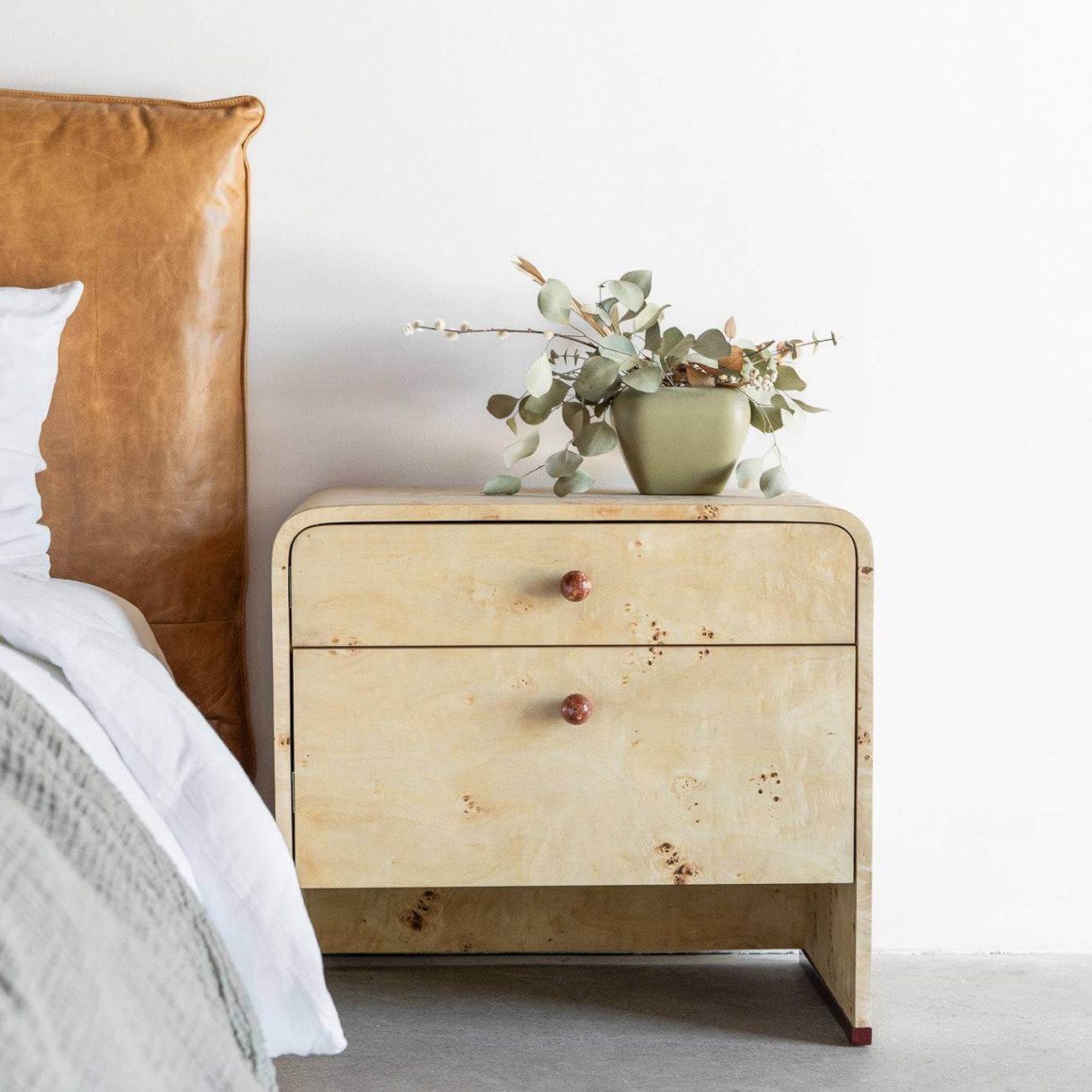
Burl wood nightstands are a showstopper thanks to their wild, swirling grain patterns that make every piece unique. It’s not actually a specific type of wood, but rather wood that forms from unusual growths on trees. Every piece is one of a kind, making burl wood nightstands a real statement.
These nightstands work beautifully in glam, art deco, or bold, artistic spaces where you want your furniture to really stand out.
Pros:
- Each burl wood nightstand is truly unique, thanks to its intricate and irregular grain patterns that create a natural work of art.
- It instantly makes a statement in any bedroom, adding character and flair that’s hard to replicate with any other type of wood.
- When properly cared for, burl wood is fairly durable and can keep its beauty for many years.
Cons:
- Burl wood is often pricey and can sometimes be tricky to find, especially if you’re looking for a very specific pattern or color.
- The unusual grain can make it more fragile or prone to splitting if not properly maintained, so it requires extra care.
8 Best Wood Nightstands to Buy in 2025
We’ve searched high and low for the best wood nightstands available right now. Here’s a roundup of 10 styles that blend quality, design, and function.
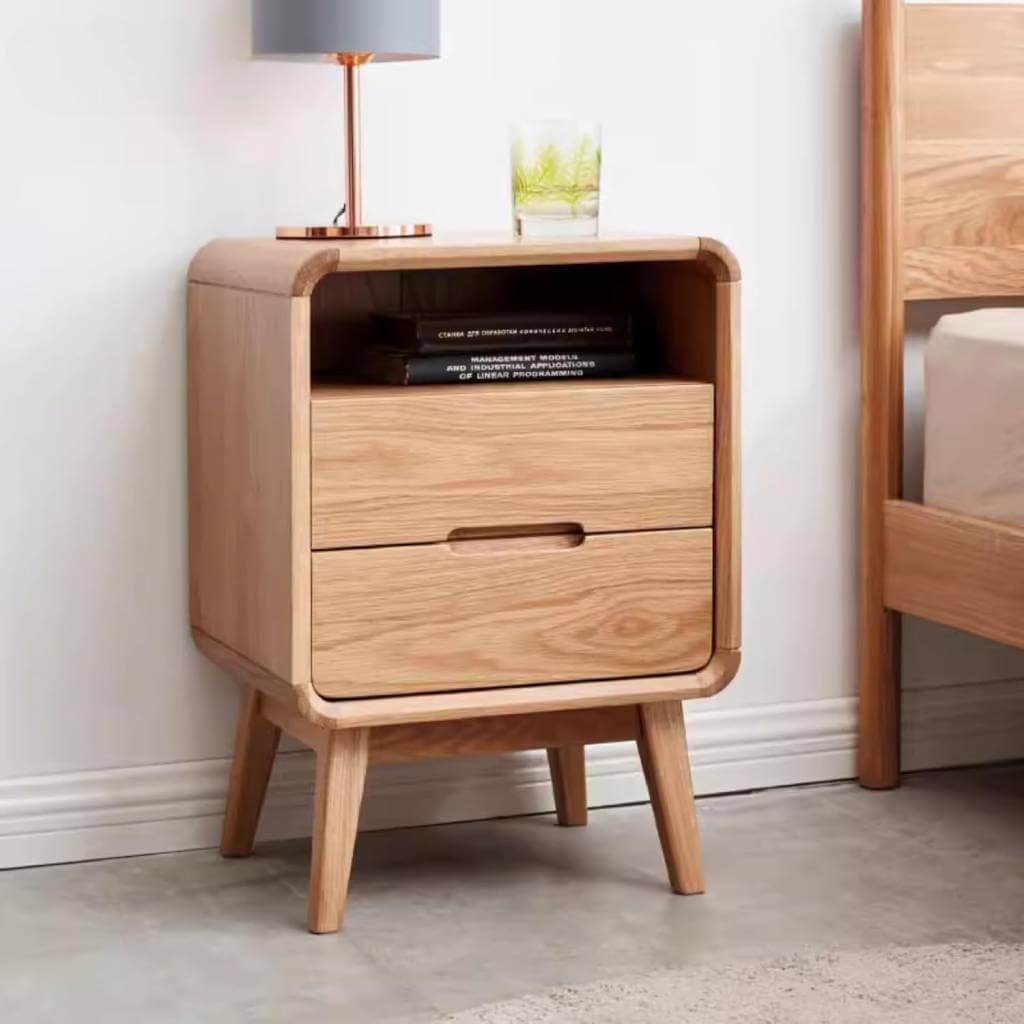
1. Solid Oak Nightstand with Drawers
Rating: 4.6/5
This minimalist yet functional nightstand by Bamskov is crafted from premium FAS-grade oak wood, finished in a natural tone with hard wax oils for a smooth and low-odor touch. Designed with two spacious drawers and an open shelf, it provides the perfect combo of display and storage, ideal for keeping books, cups, or bedside essentials organized.
Key Specs:
- Material: Solid Oak Wood
- Dimensions: 16.5″D x 13.8″W x 20.5″H
- Features: 2 Drawer, 1 Open Shelf, Hand-Polished Curved Edges
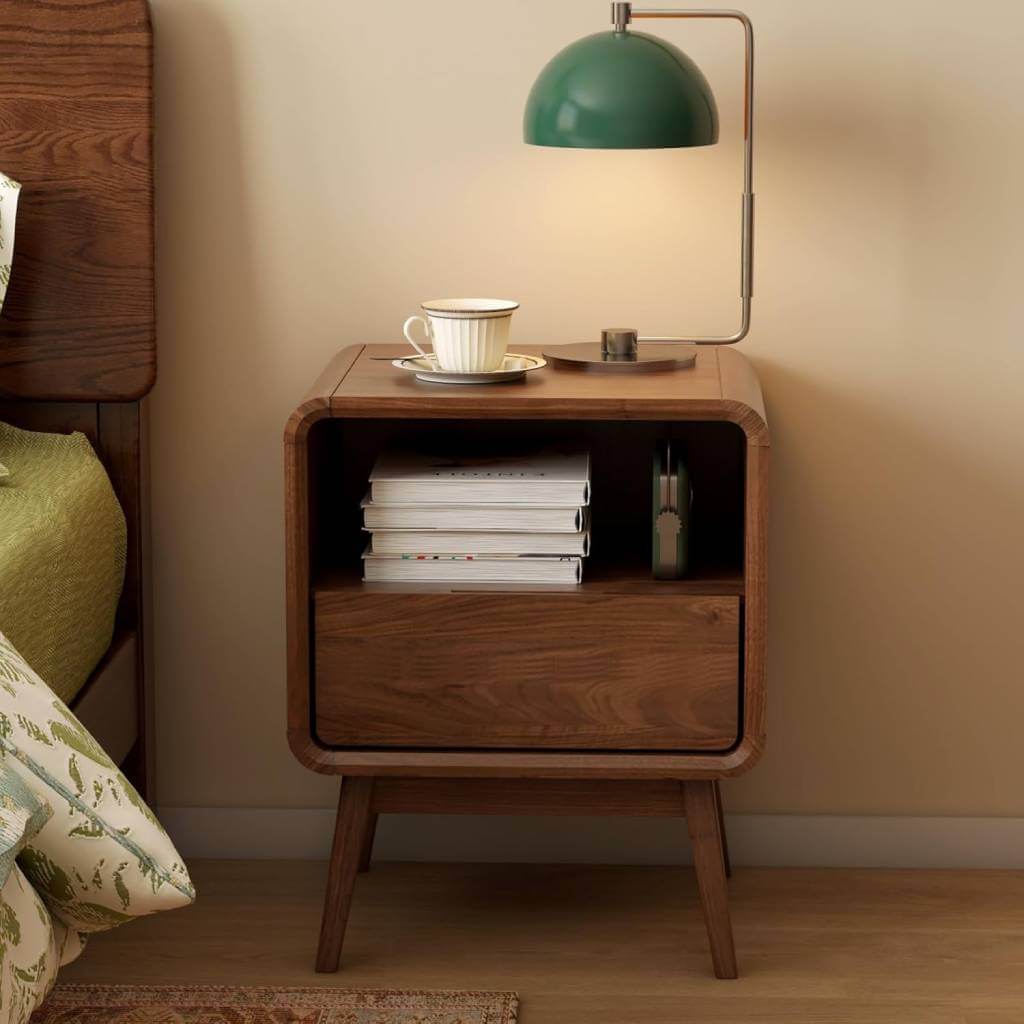
2. Walnut Wood Nightstand Set of 2
Rating: 4.8/5
Crafted from North American black walnut, this Vadisun set of 2 nightstands blends solid craftsmanship with modern design. Each piece includes a smooth-gliding drawer and an open compartment for easy storage access, while the softly rounded design and fluted drawer pulls add both safety and style. Built for durability with solid wood legs and pure wood slides, these solid wood bedside cabinets are a beautiful and reliable addition to any bedroom.
Key Specs:
- Material: Solid Walnut Wood
- Dimensions: 13.9″D x 16.5″W x 20.5″H
- Features: Drawer, Open Shelf
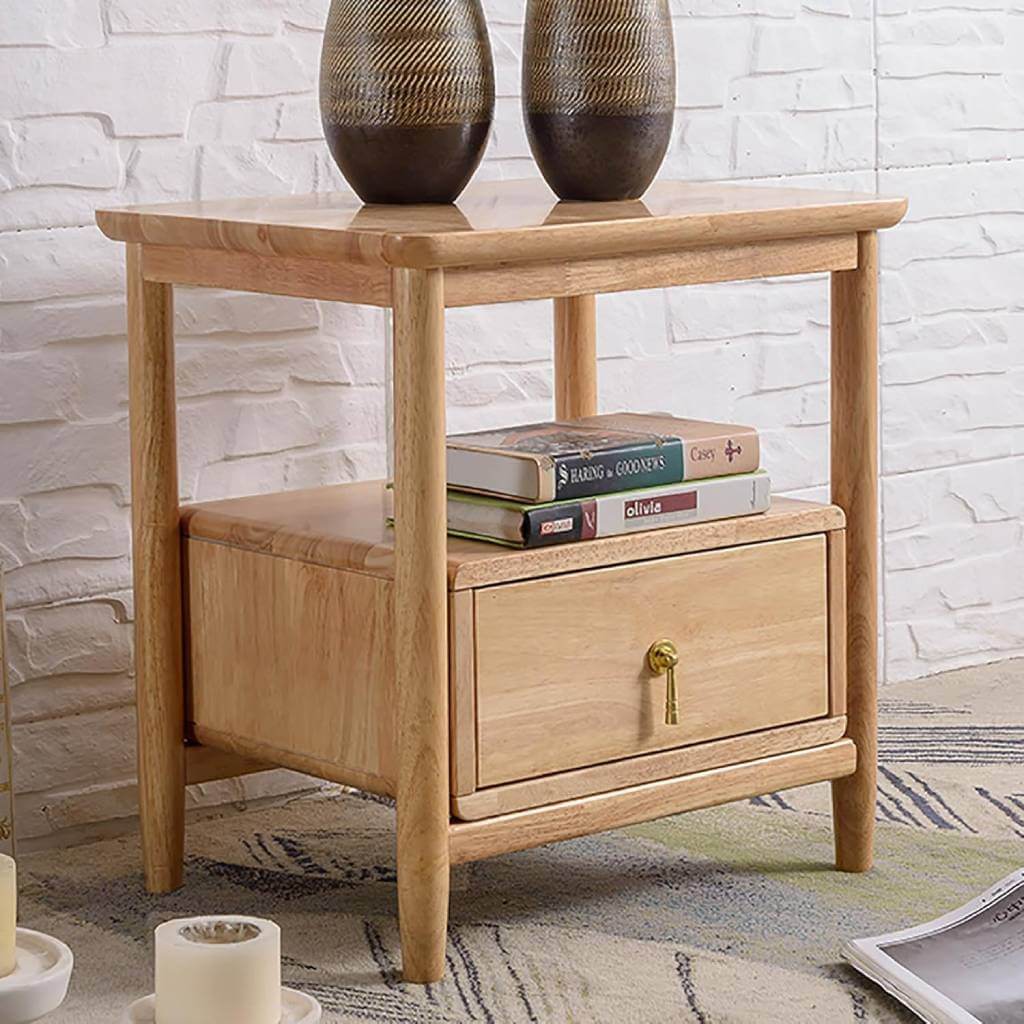
3. Light Wood Nightstand with Open Shelf
Rating: N/A
This natural wood nightstand by Uveteniy features a bamboo wood frame, blending eco-friendly materials with a minimalist design. It offers a drawer to keep your items dust-free and two open shelves for easy display of books, decor, or daily essentials. This solid wood night table has a compact size, making it a convenient addition for bedrooms, and living rooms.
Key Specs:
- Material: Bamboo Wood
- Dimensions: 15.7″D x 18.8″W x 19.6″H
- Features: 1 Drawer, 2 Open Shelves
4. Dark Wood Nightstand with Brass Handles
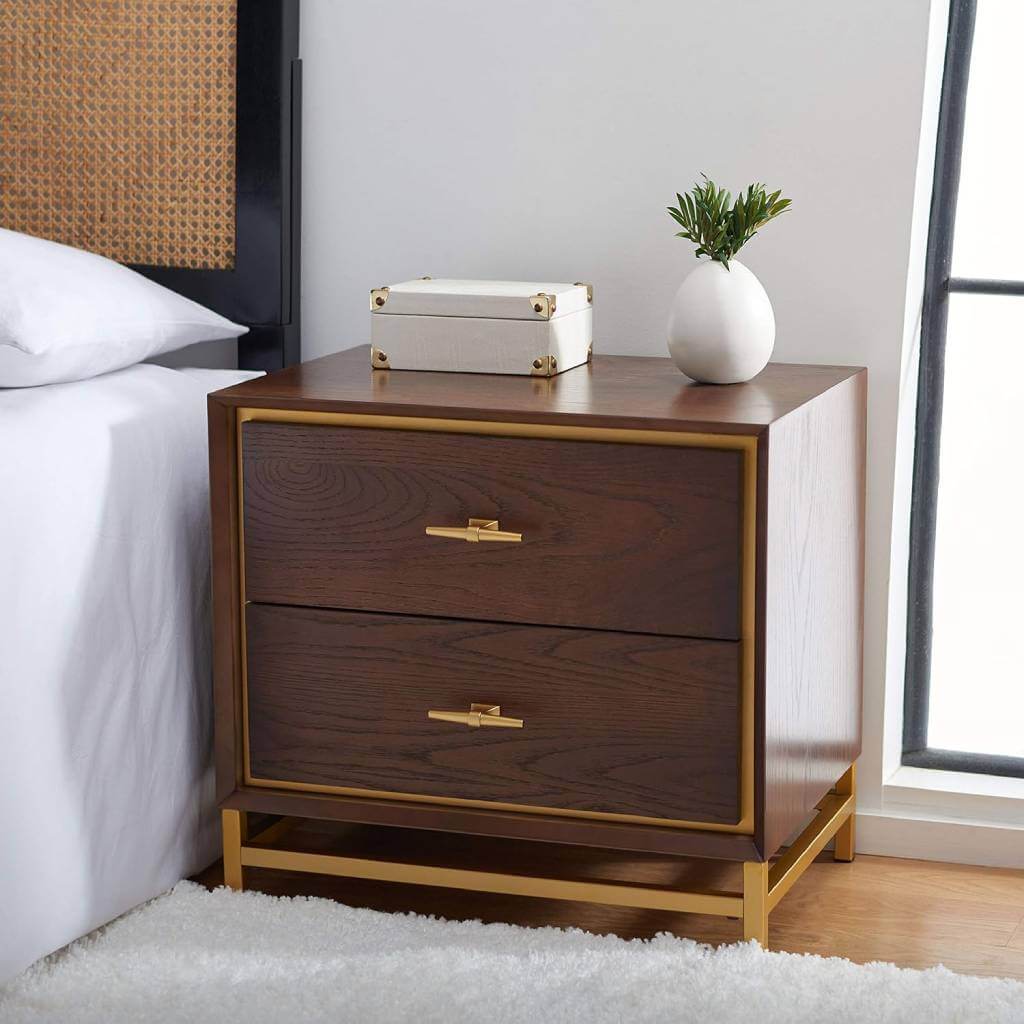
Rating: 4.6/5
This stylish nightstand from Safavieh brings a chic blend of warm walnut wood and sleek brass accents. Featuring two roomy drawers, it provides plenty of storage for bedside essentials, while its open brass base and modern silhouette elevate the look of your bedroom space.
Key Specs:
- Material: Walnut Wood & Iron
- Dimensions: 16″D x 23″W x 22″H
- Features: 2 Drawers, Brass Handles
5. Mahogany Wood Nightstand in White Finish
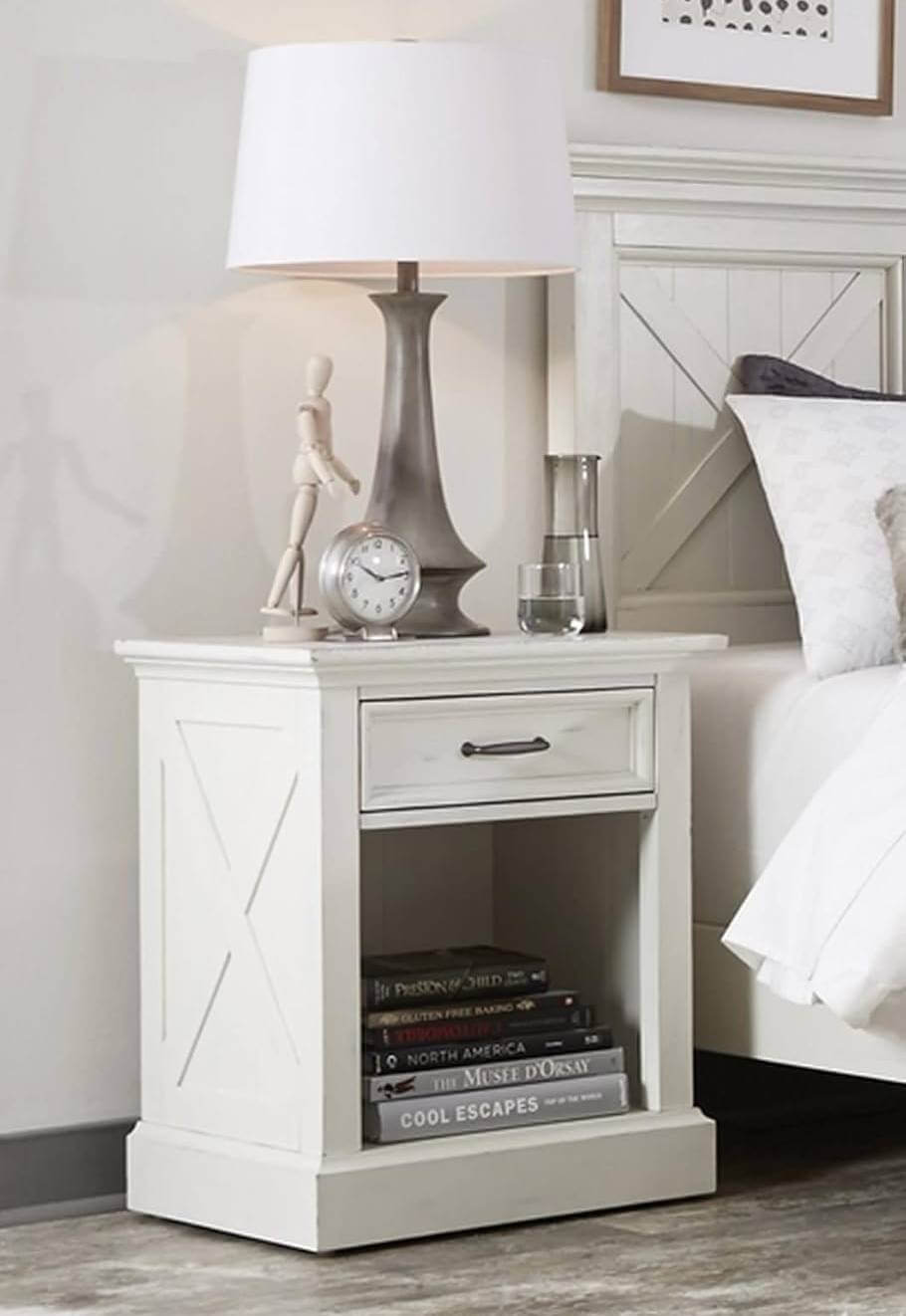
Rating: 4.5/5
Bring coastal charm to your bedroom with this mahogany nightstand by Homestyles. Its hand-rubbed white painted finish and plank top design evoke a relaxed, weathered look, while a single deep drawer and lower open shelf offer practical storage.
Key Specs:
- Material: Mahogany Wood Solids
- Dimensions: 17″D x 22″W x 26″H
- Features: 1 Drawer, Open Storage Shelf, Antiqued Nickel Drawer Pull
6. 1-Drawer Burl Wood Nightstand
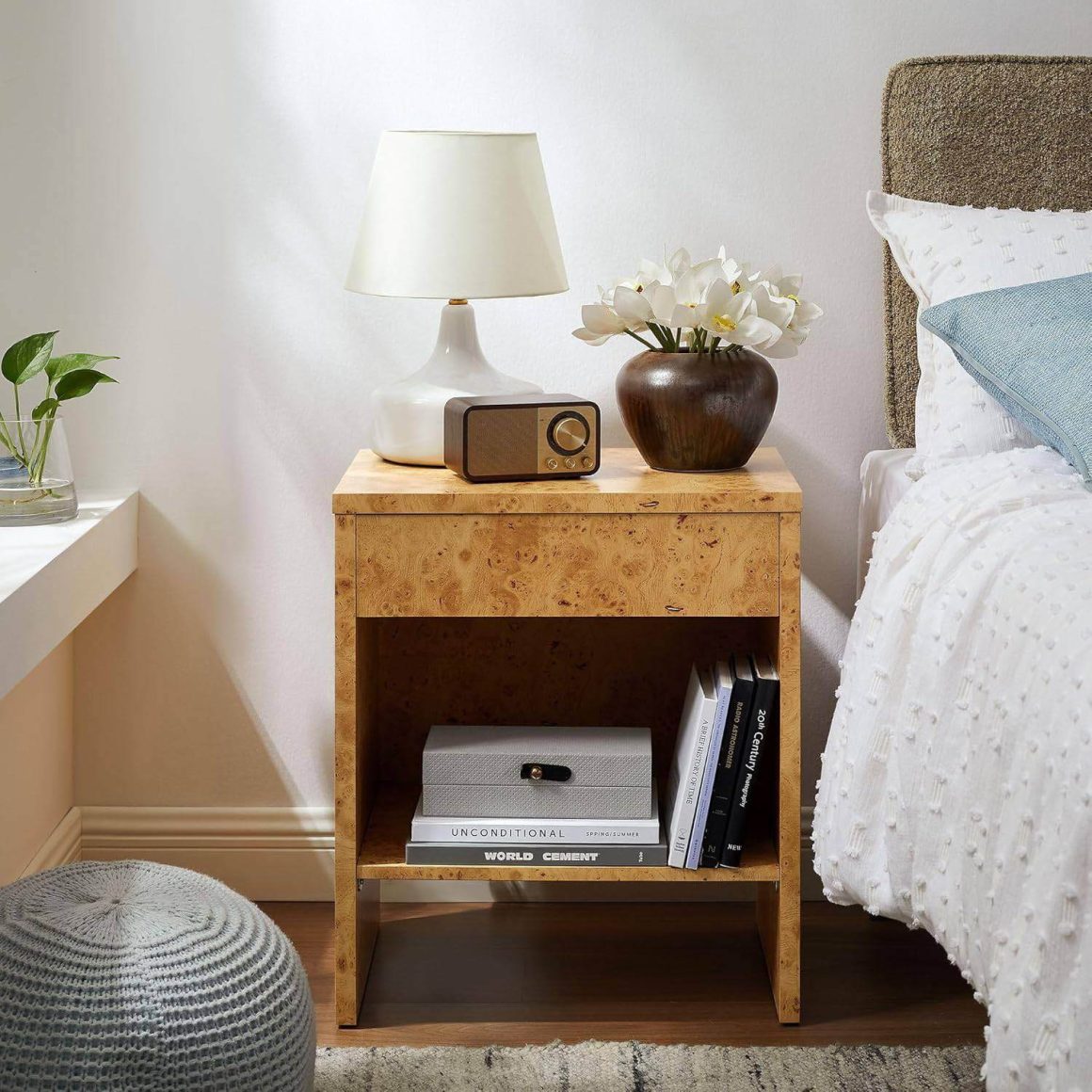
Rating: N/A
Crafted with a rich burl wood laminate and designed for modern spaces, the Modway Hudson Nightstand features a clean-lined silhouette, an open shelf for display, and a full-glide drawer for concealed storage. Its warm wood tone finish makes it a versatile accent table, perfect for bedrooms or living areas.
Key Specs:
- Material: Engineered Wood (Burl Wood Laminate)
- Dimensions: 15.4″D x 20.9″W x 24″H
- Features: 1 Drawer, Open Shelf
7. Maple Wood Nightstand with Charging Station
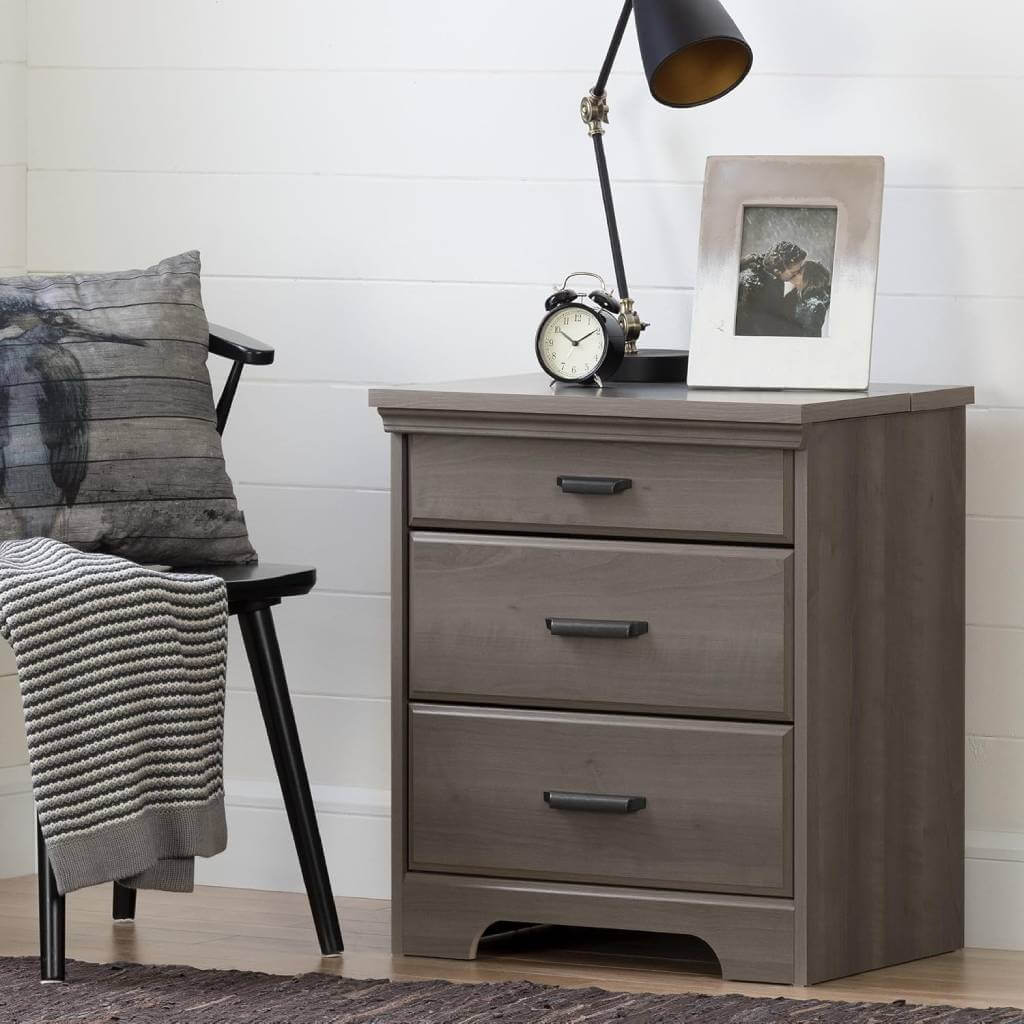
Rating: 4.2/5
Ideal for tech-savvy sleepers, this maple nightstand from South Shore combines rustic charm with smart functionality. It features two spacious drawers and a discreet charging station tucked under a sliding top shelf, keeping your devices powered up and cords hidden.
Key Specs:
- Material: Engineered Wood
- Dimensions: 16.4″D x 23″W x 27.8″H
- Features: 2 Drawers, Charging Station
8. Solid Pine Wood Nightstand with 2 Drawers
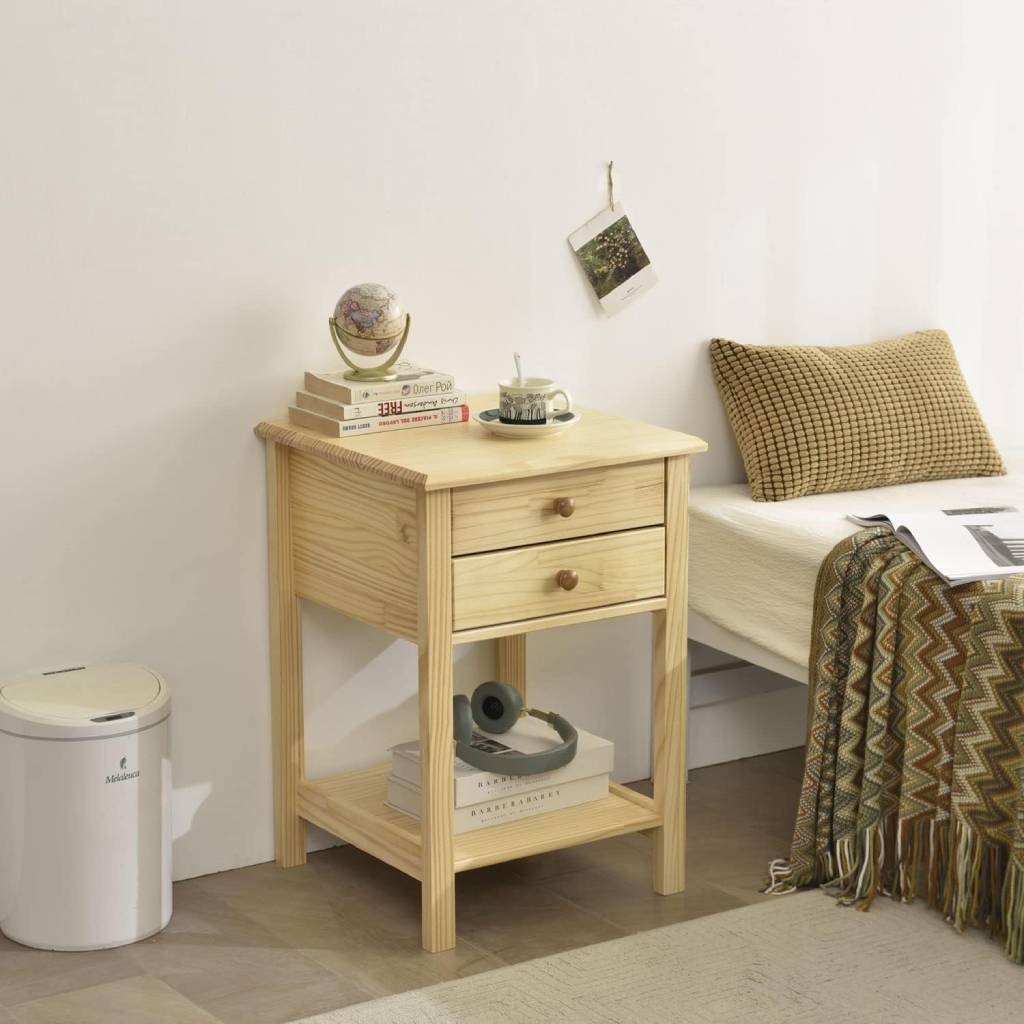
Rating: 3.4/5
Simple and sturdy, this wooden nightstand with drawers brings natural warmth and practicality to small spaces. Its slim design fits easily beside any bed, while two roomy drawers help keep your essentials organized. It’s a great choice for minimalist or rustic interiors.
Key Specs:
- Material: Solid Pine Wood
- Dimensions: 17.7″D x 17.7″W x 25.6″H
- Features: 2 Drawers, Open Shelf
What to Consider When Choosing Wood for a Nightstand
Alright, now that you’ve got a feel for the different types of wood nightstands out there, let’s talk about what really matters when you’re making your choice.
1. Durability and Longevity
First things first, you’ve got to think about how durable the wood is. Ask yourself: Are you buying this nightstand for the long haul, or is it more of a temporary solution? If you want something that lasts for years, going for hardwoods like oak, walnut, or mahogany is a smart move. These woods are known to hold up well against daily wear, whether that’s a lamp being knocked over, a cup of tea leaving a ring, or your phone charger constantly being dragged across the top.
On the flip side, if you’re on a tighter budget or want something light and easy to move around, softwoods like pine are a decent option. Just keep in mind that softer woods can dent or scratch more easily, so they may show signs of wear sooner.
2. Style and Aesthetic
We all want our bedrooms to look just right, right? So, it’s important to choose a wood that matches your overall style. For instance, if you love a modern, minimalistic vibe, you might lean toward maple or walnut because of their clean, smooth finishes. But if you’re after something warm and rustic, oak or pine might be a better fit, thanks to their natural, earthy grains.
Also, think about color. Darker woods like mahogany and walnut can add drama and elegance, while lighter woods like maple and pine keep things bright and airy. And don’t forget that you can always stain or paint most woods if you need to tweak the look a bit to fit your space perfectly.
3. Maintenance and Care
Some of us love to fuss over furniture, while others want a piece they can forget about. So before you commit to a particular wooden nightstand, it’s smart to ask: How much effort am I willing to put into maintenance?
Hardwoods generally require less day-to-day maintenance and are less prone to warping or damage. But woods like burl or even walnut might need a little more TLC (think occasional polishing or specific cleaning products) to keep them looking their best.
4. Weight and Portability
This might not seem like a big deal at first, but trust me, it can matter more than you think! If you’re someone who likes to rearrange your bedroom furniture often, a super-heavy nightstand made from oak or mahogany could quickly become a pain. Lighter woods like pine are way easier to shift around, making your life simpler if you like to keep things fresh.
5. Budget
Let’s get real: your budget is going to play a huge role in which wood nightstand you end up with. Premium woods like walnut, mahogany, and burl are stunning, but they can also come with a pretty hefty price tag. On the other hand, more affordable woods like pine and even maple can give you the same functional benefits without breaking the bank.
Think about what matters most to you. Is it the look, the durability, or just having something functional that fits your space? There’s no right or wrong answer here, but knowing your budget upfront helps narrow down your options.
6. Environmental Impact
If you care about sustainability (and let’s be honest, most of us do these days), it’s worth looking into where the wood is sourced from. Some woods like mahogany can be linked to deforestation unless you’re buying from a reputable, eco-friendly supplier. Always check for certifications like FSC (Forest Stewardship Council) that let you know the wood was harvested in a way that’s kinder to the planet.
7. Matching Existing Furniture
This is one that people sometimes overlook: how will your new nightstand fit in with the rest of your bedroom furniture? You don’t necessarily need to match everything perfectly (in fact, mixing wood tones can look really stylish), but you do want to make sure your new piece complements the overall vibe of your room.
For example, if your bed frame is a dark walnut, a pine nightstand might look a little out of place unless you balance it out with other lighter accents in the room. So take a step back and look at the bigger picture before you decide.
How to Care for a Wooden Nightstand
So, you’ve finally found the perfect wood nightstand that checks all your boxes. But here’s the thing: if you want your nightstand to keep looking its best year after year, a little care goes a long way.
Regular Dusting
This might sound basic, but dusting is your first line of defense. Dust can settle into the grain of the wood over time, making your nightstand look dull or even damaging the finish if left for too long. Make it a habit to dust your nightstand at least once a week using a soft, dry cloth.
Wipe Up Spills Immediately
We’ve all been there, knocking over a glass of water or a cup of tea right onto your nightstand. The key here is to act fast. Wood doesn’t love moisture, and if you leave spills sitting too long, they can seep in and cause staining or even warping.
Avoid Harsh Chemicals
It’s tempting to grab the nearest all-purpose cleaner when you’re wiping down your wooden nightstand, but most of those are way too harsh for wood. Stick to gentle, wood-specific cleaners or just a bit of mild soap mixed with water.
Protect from Heat and Sunlight
Both heat and direct sunlight can be rough on wood. Heat can cause warping or leave rings and marks, while sunlight can fade the finish over time. To keep your nightstand safe, always use coasters or mats under hot drinks, and try to position your nightstand out of direct sunlight if possible.
Polish Occasionally
To bring out the natural beauty of the wood and keep it looking vibrant, it’s a good idea to polish your nightstand a few times a year. Choose a high-quality furniture polish or wax that’s suitable for the type of wood you have. Follow the instructions carefully, and remember: a little goes a long way.
Handle Scratches and Dings
No matter how careful you are, your nightstand might get the occasional scratch or ding, especially if it’s made from softer woods like pine. For light scratches, a wood touch-up marker or crayon that matches your nightstand’s color can work wonders. For deeper marks, you should use a wood filler or consult a professional for refinishing.
Check Hardware
Don’t forget about the little details like knobs, handles, or drawer runners. Over time, these can loosen up or get wobbly. Check them every few months and tighten any screws if needed. This keeps your nightstand sturdy and prevents unnecessary wear.
Mind the Humidity
Wood is super sensitive to changes in humidity. It can expand in high humidity and shrink when it’s too dry. If you live in an area with extreme seasons, consider using a humidifier in winter and a dehumidifier in summer to keep your room’s humidity levels steady. This helps prevent cracking or warping over time.
FAQs on Wooden Nightstands
What is the best wood for a nightstand?
The best wood for a nightstand really depends on what you’re looking for. If durability is your top priority, oak or walnut are fantastic choices because they’re super strong and long-lasting. For a budget-friendly option, pine works well, though it’s a bit softer. Plus, if you want something fancy and unique, burl wood nightstands are great, thanks to their beautiful patterns.
Is solid wood better than engineered wood for nightstands?
Yes, solid wood is generally better if you want something that lasts a long time. A solid wood nightstand is sturdier, looks more natural, and can be refinished if it gets scratched. Engineered wood (like MDF or particleboard) is more affordable, but it doesn’t hold up as well over time, especially in humid rooms.
How can I tell if a nightstand is made from real wood?
A quick way to check is by looking at the grain and edges. Real wood nightstands have a natural, uneven grain pattern, while fake wood usually has a printed or uniform look. Also, solid wood nightstands feel heavier than engineered ones. Check the back or underside, as real wood shows grain even there, but veneers or laminate look flat.
How to build a wooden nightstand?
Building your wooden nightstand can be a rewarding DIY project, especially if you want something unique to your style and space. It looks challenging at first, but when you break it down step by step, it’s definitely doable. Here’s a step-by-step guide to help you along the way:
- Step 1: Plan your design. First, decide on the style and size of your wood nightstand. Do you want drawers, shelves, or a simple table? Sketch out your idea and include exact measurements that fit your space.
- Step 2: Choose your wood. Pick a type of wood that fits your needs and skill level. Pine is budget-friendly and great for beginners, while oak or maple offers more durability if you’re up for the challenge. Make sure the wood you select is smooth and straight.
- Step 3: Gather your tools. You’ll need a saw (either circular or a simple handsaw), drill, screws or nails, wood glue, clamps, sandpaper, measuring tape, and your choice of finish (like stain, paint, or varnish).
- Step 4: Cut your wood pieces. Measure carefully and cut out the legs, top, sides, and any shelves or drawers based on your design plan.
- Step 5: Assemble the frame. Start by attaching the legs to the side panels, then secure the top. If you’ve planned for shelves or drawers, build and fit those next.
- Step 6: Secure everything. Use wood glue and screws to make the nightstand strong and long-lasting. Check that everything is level and aligned as you work.
- Step 7: Sand the entire piece. Sand all the surfaces thoroughly until they feel smooth to the touch. This step makes a big difference in the final look.
- Step 8: Apply your finish. Whether you choose to stain, paint, or varnish your wood nightstand, this is where your piece comes to life. Let it dry fully before placing anything on it.
With these steps, you’ll have a beautiful, sturdy wood nightstand that you can proudly say you made yourself!
Want a more detailed guide? Check out this step-by-step DIY nightstand tutorial.
How long do wooden nightstands typically last?
A well-made wood nightstand can easily last 10 to 20 years or even longer with proper care. Solid wood options tend to outlast engineered wood, especially if you keep up with cleaning and maintenance.
What is the difference between a nightstand and a bedside table?
People often use these terms interchangeably, but technically, a nightstand usually has at least one drawer and offers more storage. A bedside table is often just a simple table with no storage. Both serve the same purpose: keeping your essentials close while you sleep.
Are solid wood nightstands worth the investment?
Absolutely. While they cost more upfront, a solid wood nightstand is a piece of furniture that can last for decades. Plus, they look gorgeous, can be refinished if needed, and often become a long-term staple in your bedroom.
Conclusion
Choosing the right wood for a nightstand might seem like a small detail at first, but as we’ve seen, it can make a huge difference in both style and durability. Whether you’re drawn to the rustic charm of oak, the luxury of walnut, or the simplicity of pine, there’s a perfect wooden nightstand out there for your space.
If you’re ready to upgrade your bedroom setup, scroll back to our top picks or head to your favorite furniture store to find the perfect wood nightstand for you. Trust me, your bedroom will thank you for making the right choice.
Found a favorite? Be sure to check out the latest designs and deals, we’re always updating with fresh finds to inspire your space.
See Also: