There is something I have been noticing for quite some time now: hallways are often overlooked during design and construction. They see it as just “the pass and go entrance.” It is regarded merely as a pathway connecting rooms and possibly a backdoor. However, they are still extremely vital arteries of circulation within your home, affecting traffic flow, accessibility, visual harmony, and space efficiency. One common question among homeowners, architects, and remodelers is:
“How long should a hallway be?”
In my almost truth and facts, there is no single standard hallway length. But the ideal hallway length often depends on what your home size, floor plan, building codes, function, and interior design goals will look like (if you ask me again and again). This guide dives into architectural standards, design considerations, ergonomics, and real-life applications to help you plan or assess your hallway intelligently.
Why Hallway Dimensions Matter
Hallways are not just empty transitional spaces. Their dimensions influence:
- Traffic flow: Is it going to be easy in terms of movement between rooms, the kitchen, and the back doors? That should be your question for traffic flow.
- Accessibility: Some hallways are built to accommodate disabled people. So, is the hallway a wheelchair or mobility aid navigation type?
- Perceived spaciousness: Some hallways are too tiny, and some are spacious. So, is the hallway a cramped vs open feel type?
- Lighting and ventilation: Some hallways are long, and some are short, and the next thing you will see is the living room. But yet again, there should be bright lights that will bloom in such hallways.
- Design aesthetics: Is it a minimalistic or a grand entry hallway? Look at your hallway, and you will know the answer to that question.
Poorly designed hallways can waste square footage, feel claustrophobic, or hinder daily functionality. Correct dimensions ensure a practical, elegant, and code-compliant home.
Standard Hallway Lengths: What Codes and Experts Say
Unlike width and height, hallway length is not rigidly defined by building codes because it depends entirely on floor plan configuration. However, there are some specific insights you ought to know, which include:
- International Residential Code (IRC): There is actually no specified maximum length, but the width must be ≥36 inches (approximately 91.5 cm).
- Architectural recommendations: I am not a big fan of long hallways because they occupy too much space. It is better to limit excessively long hallways to avoid wasted space and echoing emptiness.
- Design experts: Like the one I said earlier (the architectural recommendations), short and efficient hallways (≤15 feet) are far better. This is possible in order to maximize the usable area.
Keep this at the back of your mind: In luxury or large-scale homes, hallways can be 20–40 feet long because of how big the houses are. This can be so, particularly gallery-style hallways where you can display arts or sculptures before you reach the other rooms.
Factors That Determine Hallway Length
A. Floor Plan & Room Distribution
The greatest determinant of any hallway length in every single home is how rooms are arranged. Let me give you quick examples:
- The linear or ranch-style layouts require longer hallways all the time. This is a connecting sequence that can link you to the rooms along one side.
- Cluster or radial layouts can minimize hallway length by just grouping rooms around central living areas.
B. Home Size & Layout Type
- Small apartments or bungalows (500–1,200 sqft): Most hallways in different types of homes are often under 10 feet. All they do is connect the bedroom and bathroom.
- Medium-sized homes (1,200–2,500 sqft): Hallways can range from 10 feet to 20 feet. Moreover, they are built that way with turns so that they connect the living spaces efficiently.
- Large homes (2,500+ sqft): May have hallways exceeding 20 feet, especially if designed with grandeur in mind.
C. Design Style & Visual Flow
Design philosophies influence hallway length:
- Modern minimalist homes: I have seen some hallways where they are shorter, and it is more like an “open floor plan.”
- Traditional homes: There are currently some well-defined hallways separating rooms for privacy purposes.
- Luxury estates: Long gallery halls with art or architectural detailing as design statements. Some hallways are outstanding and send a statement, but some are just plain (full of tables and shoes).
D. Accessibility & Safety
Long hallways must include considerations for:
- Lighting: There should be bright lights or, better still, chandeliers. This type of function is to avoid dark spots.
- Handrails or support: This is for assisted living or elderly-focused designs.
- Emergency egress: This is for multifamily units – families that are large in number.
Minimum and Maximum Hallway Lengths
Minimum Length
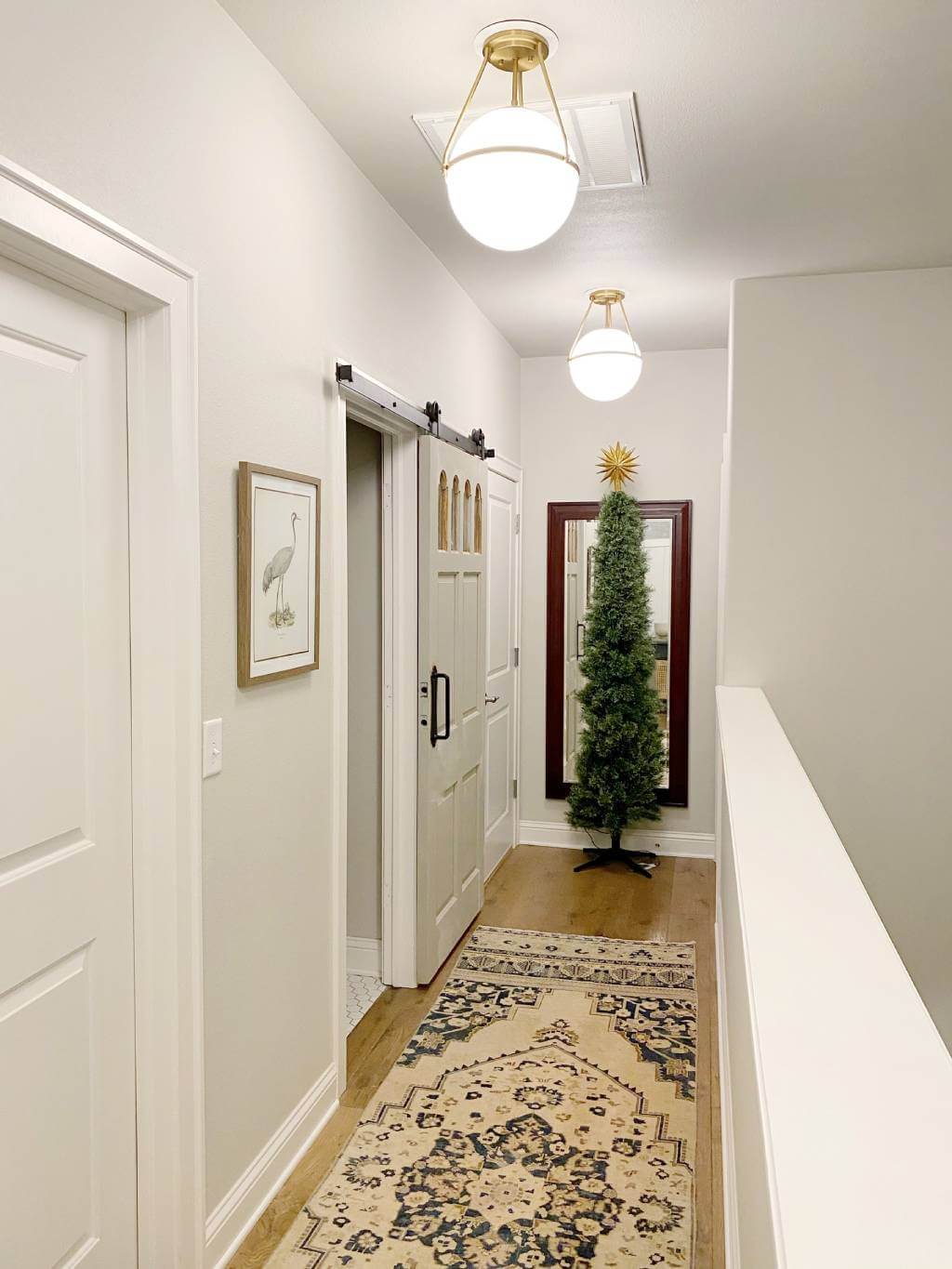
There is no minimum length that exists except as dictated by the floor plan through the architecture. Some micro-apartments, aka small apartments, have near-zero hallway length due to open layouts. But the macro-apartment has small or large hallways that are beautiful.
Maximum Length
- Let’s start with the residential single-family homes. Suctypespe of homes always keeps the hallways’ length under 20 feet. It is ideal this way unless it is intended as a design feature (e.,g. gallery hallway).
- As for exquisite hotels, schools, or commercial buildings, codes require maximum corridor lengths before requiring a fire door or egress route break (often ~150 feet).
The Relationship Between Hallway Width, Height, and Length
Width vs. Length
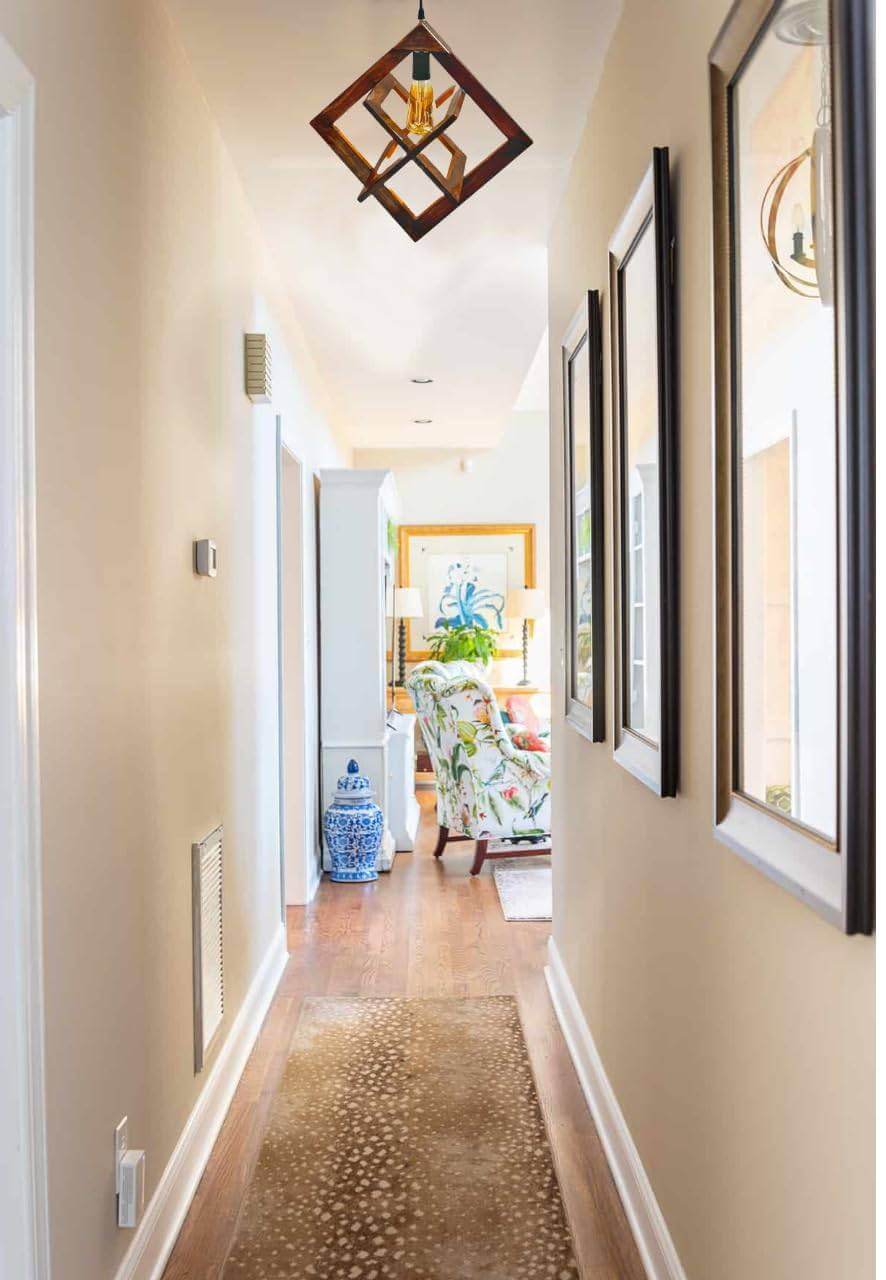
Proportion is the primary key in terms of width and length. A narrow hallway (<36″) with excessive length (>20 ft) will feel like a tunnel, and it will be overwhelming and unwelcoming. But the wider hallways (4–5 feet) can accommodate longer spans comfortably.
Height vs. Length
You have to take note of this because low ceilings (≤8 ft) in long hallways can feel oppressive. But if you see any raised ceilings to 9–10 ft, it enhances spaciousness and brings about visual balance.
Short vs Long Hallways: Pros and Cons
| Short Hallways | Long Hallways |
| ✔ Saves square footage | ✔ Creates a dramatic design feature |
| ✔ Faster room-to-room access | ✔ Ideal for art or photo galleries |
| ✔ Feels cozy and efficient | ✔ Enhances privacy between zones |
| ✘ Limited opportunity for a design statement | ✘ Consumes more usable area |
| ✘ Can feel cramped if too narrow | ✘ May require more lighting and climate control |
Designing Hallways That Feel Comfortable and Spacious
Use Natural Light
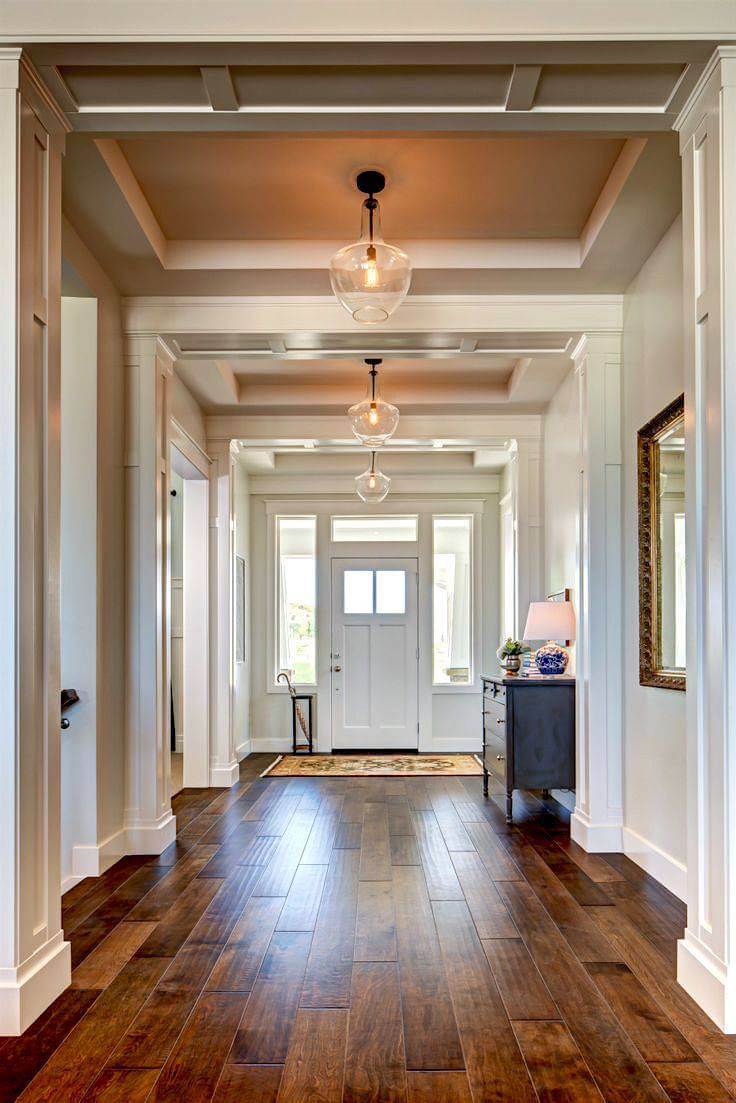
You can use natural light, like the morning and afternoon sun, transom windows, or sidelights. This way, it will make your long hallways look bright and pleasant.
Add Visual Interest
Try to add some pleasant textures like artworks, mirrors, wainscoting, or patterned runners. This can break monotony in longer halls.
Optimal Proportion
Keep the hallway width at least 1/20th of the length for r balanced visual scale. For example, a 20 ft hallway should be ≥12 inches wide, but practically ≥36 inches in the code minimum. Have hallways that best suit your home style. This way, you will know what your home entrance will look like.
Strategic Lighting
- Place light fixtures at regular intervals (every 8 ft is very good).
- Wall sconces, recessed LEDs, or pendant chandeliers add dimension. There are good and quality chandeliers that will change the atmosphere of your hallway.
Flooring Continuity
Make sure there is continuous flooring material so that it can elongate short hallways and unify long ones. It is that simple!
Common Hallway Length Mistakes to Avoid
- Excessively long hallways without a functional purpose. By the end of the day, it will be a waste of floor space.
- Too many hallway turns. Unfortunately, it is quite awkward as if you are in a tunnel game show. It also creates awkward navigation and wasted corners.
- Narrow, long hallways without visual breaks. This will feel claustrophobic.
- Poor lighting distribution in long hallways. It creates shadowy and unsafe zones. It may be like a scary movie for kids who are often scared of the dark.
- Ignoring the hallway’s purpose in the design phase. This will lead to structural inefficiency – it is going to be that bad. So, avoid such!
FAQs: Hallway Length
1. What is the average hallway length in homes?
It is typically from 10 feet to 20 feet. Entryways sometimes are from 4 ft to 8 ft short hallways, while bedroom wings in larger homes often extend to 20+ feet.
2. Can I eliminate hallways in design?
Open concept layouts minimize hallways. However, hallways enhance privacy and traffic flow. Eliminating them may reduce zoning clarity.
3. How do architects determine hallway length?
Based on:
- Spatial programming (room adjacencies).
- Circulation efficiency.
- Structural requirements (load-bearing walls placement).
- Aesthetic goals.
4. Are there hallway length restrictions in building codes?
Actually, no. Not in any typical residential codes. Commercial or multifamily codes regulate hallway lengths for fire safety measures and egress. It is usually with required fire doors after set distances – that is how it is in most houses.
5. Does hallway length affect resale value?
Indirectly, yes. Excessively long hallways that waste usable area can create an atmosphere that was meant to shine in that hallway. But having well-designed hallways is a big plus when it comes to adding elegance, desirability, and navigability.
Conclusion
So, how long should a hallway be? This is a simple question with a simple answer, but if it is not planned well, it is a great disaster. Though a universal standard does not dictate the ideal hallway length, but rather by your:
- Floor plan layout
- Room adjacency needs
- Design aesthetic goals
- Accessibility and code considerations
This is what I want you to do. You must aim for efficient and purposeful hallways under 20 feet in any of your standard homes. Unless your hallway is intentionally designed as gallery corridors or grand entryways, then this will be a different scenario. Optimize them with balanced width, natural light, strategic lighting, and visual interest to transform these often-forgotten spaces into comfortable, functional, and beautiful parts of your home.
I want you also to remember this and keep it in your brain: Hallways are the veins of your home. They are built that way to connect spaces, circulate life and activity, and reveal your design sensibility through every step you take. That is why my interior designers take their time on making the hallways perfect because it is the foundation of a beautiful home.
Read Also: Modern Hallway Ideas To Create A First Impression.